
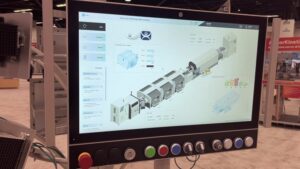
FactoryTalk Optix and PanelView Plus represent two entirely different eras of Rockwell Automation’s visualisation strategy. While PanelView Plus (running FactoryTalk View ME) is a highly reliable, proprietary, and traditional hardware-software combination, FactoryTalk Optix is a modern, open, and cloud-enabled software platform that scales across diverse deployment types.
The differences between the two systems span configuration, Logix integration, and terminal hardware choices:
1. Configuration and Development Benefits
-
Development Environment:
-
PanelView Plus: Relies on the traditional, desktop-bound FactoryTalk View Studio (Machine Edition). It requires local installations, licensing per workstation, and lacks native cloud collaboration.
-
FactoryTalk Optix: Utilises FactoryTalk Optix Studio, which supports SaaS-enabled workflows. Developers can design and test applications directly within a web browser via FactoryTalk Hub or via a local desktop installation. It features built-in multi-user collaboration and integrated version control (such as GitHub integration).
-
-
Design & Extensibility:
-
PanelView Plus: Relies on fixed graphic displays, restrictive layout configurations, and basic scripting blocks.
-
FactoryTalk Optix: Features modern responsive graphics that automatically adjust to different screen resolutions. It supports modular, object-oriented design, style sheets, and extensive customisation using C# scripting (NetLogix) via an open API. This allows developers to dynamically build or modify projects at design-time or even while the system is running.
-
-
Licensing & Openness:
-
PanelView Plus: Tied heavily to a proprietary model and fixed features per terminal.
-
FactoryTalk Optix: Operates on an open architecture natively built on OPC UA and MQTT communication models. Its licensing model is modular—you only purchase tokens or pay for the specific tokens/features you use (e.g., specific drivers, data loggers), making it highly customisable.
-
2. Integration with Logix Control Platforms
-
Tag Management and Synchronisation:
-
PanelView Plus: While it communicates well with Logix via FactoryTalk Linx, tag changes in the controller often require manually re-browsing or updating the tag database within the HMI software, which can lead to data mismatches.
-
FactoryTalk Optix: Features deeper, native modern integration. It supports direct importing and structured data types seamlessly. If changes are made to Logix extended tag properties or system structures, the platform handles variable definitions smoothly, acting on an optimised information model.
-
-
Alarms and Core System Objects:
-
PanelView Plus: Alarms must be explicitly configured, mapped, and handled manually on separate HMI-based alarm servers.
-
FactoryTalk Optix: Natively supports Logix tag-based alarms and extended tag properties. It streams high-speed data natively to local embedded databases (SQLite) or cloud-hosted engines like InfluxDB without needing extra middleware.
-
3. Range of Terminals Available
-
PanelView Plus Terminals:
-
The hardware range is tightly coupled to the software. It includes traditional, proprietary PanelView Plus 7 terminals available in Standard and Performance editions.
-
These are robust, closed, industrial operator panels optimised strictly to execute FactoryTalk View ME runtime files. They are available in fixed screen sizes (typically 4” to 19”) with specialised form factors like stainless steel or on-machine ArmorView™ variants.
-
-
FactoryTalk Optix Hardware Flexibility:
-
Optix is independent of hardware and can run on both Windows and Linux operating systems.
-
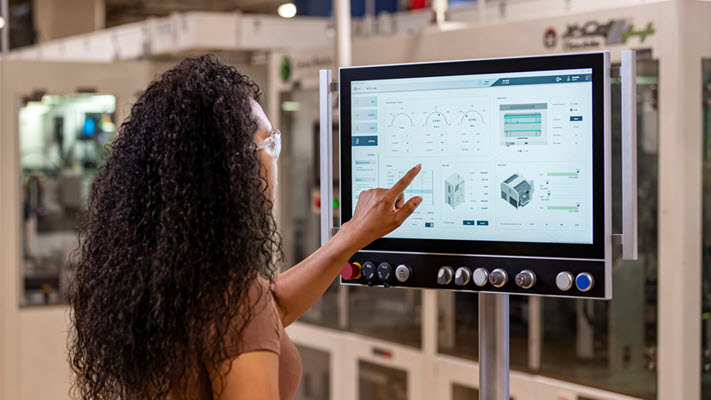
OptixPanel Graphic Terminals: A dedicated lineup of modern, closed embedded panels (available in Compact and Standard variants) designed explicitly to run the Optix runtime. They feature widescreen aspect ratios, premium bezel options (Aluminium or Aluminium/Glass), and PCAP multi-touch screens that support modern gestures like pinch and swipe. Standard models double as secure remote access gateways right out of the box via FactoryTalk Remote Access software.
-
Industrial PCs and Computing: Beyond dedicated panels, Optix scales easily onto industrial PCs, edge gateways, or even containerised environments (utilising Kubernetes) for high-availability multi-node deployments.
-
In Summary,
-
PanelView Plus is Rockwell’s traditional, hardware-locked HMI platform running FactoryTalk View ME, built specifically for highly reliable, legacy-driven, and closed Allen-Bradley PLC ecosystems.
-
FactoryTalk Optix is a next-generation, cloud-enabled software ecosystem built on open OPC UA standards, supporting web-based collaboration, responsive graphics, and flexible deployment across both Windows/Linux PCs and third-party hardware.